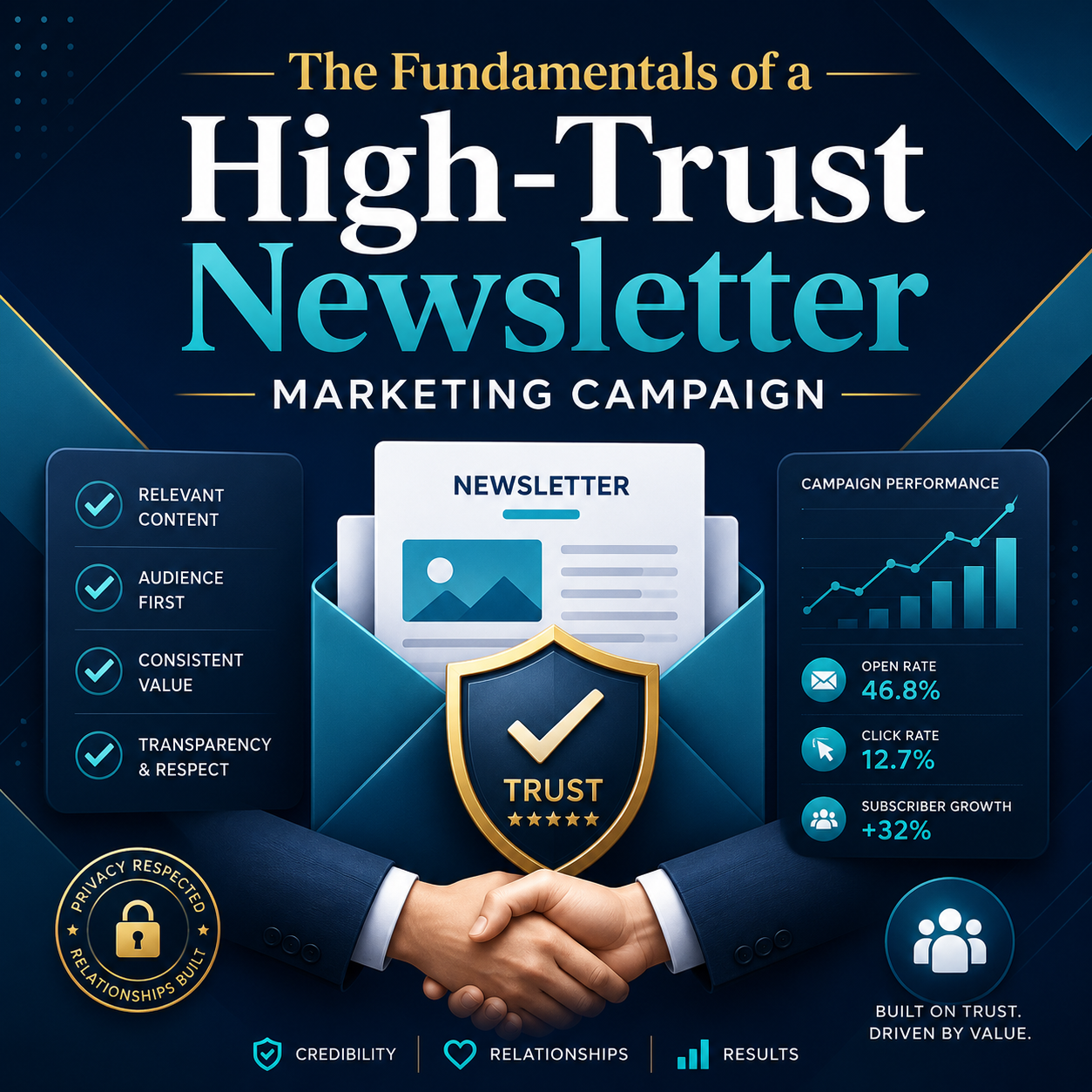
A good newsletter is a recurring product. It has a defined audience, a useful promise, a recognizable format, an accountable sender, a reliable delivery system, and a reason for the reader to return.
1. Write the subscription promise first
Before choosing colors or subject lines, state what subscribers will receive, how often, and why it will be useful. Put that promise on the signup page and repeat it in the confirmation email.
2. Prefer confirmed subscriptions
Double opt-in creates a cleaner evidence trail: the address was submitted, a confirmation message was delivered or attempted, and the recipient activated the subscription using a unique link. It also reduces typing errors and hostile third-party signups.
3. Design a repeatable editorial structure
Opening
One sentence explaining why this edition matters.
Core value
The primary analysis, story, guide, or announcement.
Action
One clear next step rather than several competing buttons.
4. Build HTML for hostile environments
Email clients are not normal browsers. Use simple layouts, meaningful plaintext, descriptive alt text, large tap targets, conservative CSS, and a browser-view fallback. Test with images disabled and on a narrow mobile screen.
5. Protect deliverability
- Authenticate the sending domain with SPF, DKIM, and an appropriate DMARC policy.
- Use a consistent, monitored From identity.
- Remove hard bounces and honor unsubscribes.
- Increase volume gradually when a domain or stream is new.
- Separate transactional and marketing streams when appropriate.
- Do not treat an SMTP acceptance as inbox placement.
6. Measure the reader journey
Open and click observations are imperfect because privacy systems and security scanners can create events. Combine them with confirmed subscriptions, replies, direct visits, conversions, unsubscribes, and retention across several editions. Describe analytics as observations rather than proof of human behavior.
7. Preserve every edition
Retain the final MIME message, HTML, plaintext, attachments, recipient state, SMTP diagnostics, tracking events, suppression changes, and generated reports. A searchable archive turns campaigns into organizational knowledge.
8. Improve one thing at a time
After each edition, record what changed, what the audience did next, what failed, and what should be tested in the next send. Consistent small improvements usually outperform occasional complete redesigns.
The best newsletter is not the loudest. It is the one readers recognize, trust, and would notice if it stopped arriving.