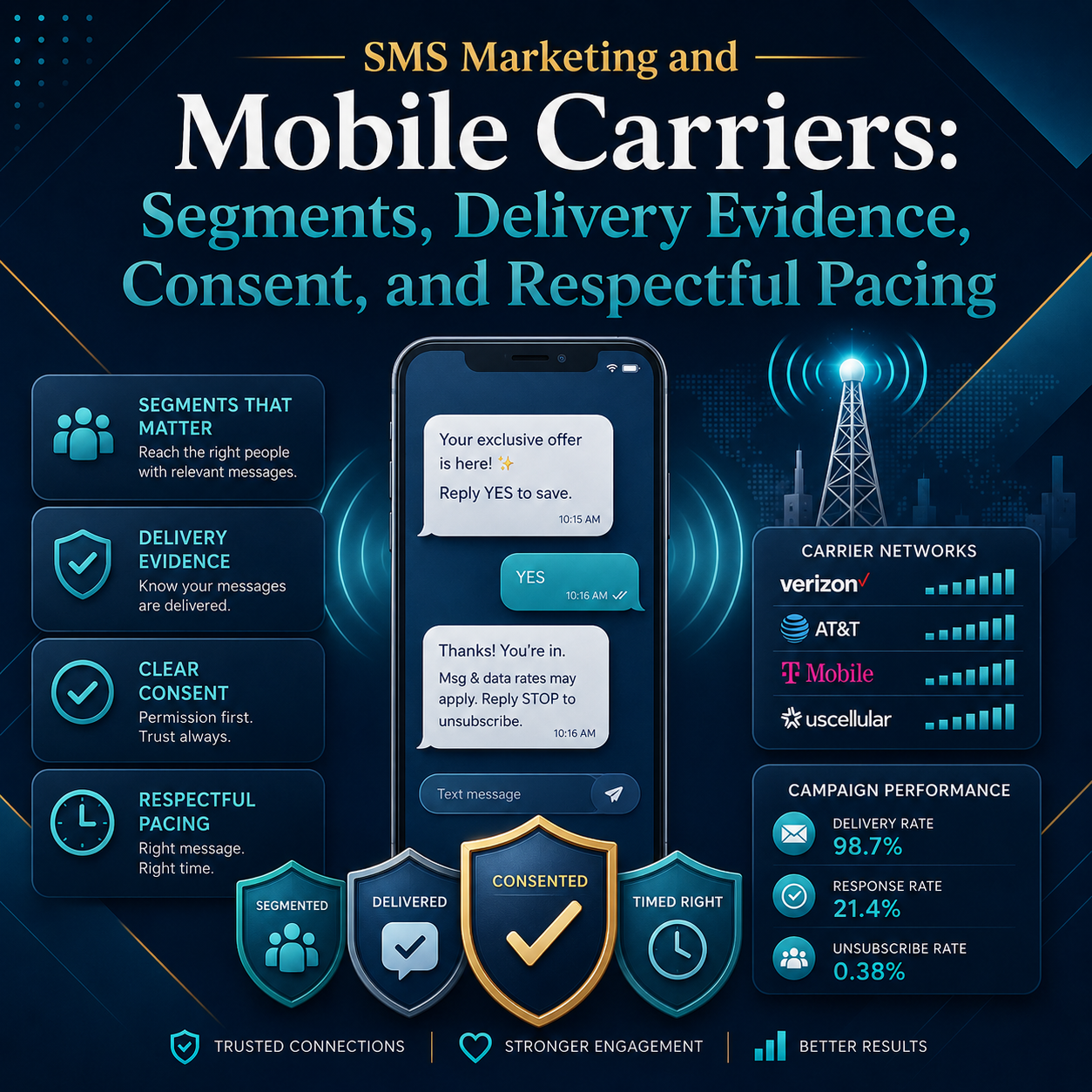
Text messaging feels immediate because the interface is simple. Behind that simplicity are device queues, carrier networks, encoding rules, number intelligence, handset state, filtering, consent obligations, and delivery evidence that must be interpreted precisely.
A message is billed and paced in segments
Standard GSM-compatible text often fits more characters per segment than Unicode text. Emojis, accented characters, non-Latin scripts, and some punctuation can change the encoding and reduce the available characters per segment. A long message may therefore consume several carrier segments even though the recipient sees one conversation bubble.
The evidence chain
- The server reserves a recipient job.
- A paired device retrieves the job with its permanent credential.
- The device submits one or more segments to the mobile operating system.
- The carrier may return a submission or delivery status.
- The device reports the result, diagnostic, timestamps, and available carrier metadata to the server.
- The platform preserves the recipient record and cumulative report.
A device result can support a statement such as “the handset reported carrier delivery.” It normally cannot prove the person saw, understood, or personally possessed the phone at that moment.
Carrier and number intelligence
Country code, numbering plan, line type, carrier, portability, and validity data can help route messages and investigate failures. Intelligence data can be incomplete or stale after number portability. Preserve the provider, query time, raw response, normalized interpretation, and limitations.
Consent and opt-outs belong in the workflow
Commercial and automated texts can be governed by the Telephone Consumer Protection Act, FCC rules, state law, carrier policy, contractual messaging rules, and laws outside the United States. Requirements depend on the message, technology, audience, and jurisdiction. Obtain and preserve the appropriate consent before sending, identify the sender, honor STOP and equivalent requests, and suppress future jobs immediately.
Respectful pacing improves both compliance and performance
- Use local-time sending windows.
- Avoid rapid repeated attempts after a failure.
- Cap segments per device and per day.
- Pause a campaign when opt-out or failure rates change unexpectedly.
- Keep content concise and place the primary action early.
- Do not disguise marketing as a personal emergency or service alert.
Practical campaign checklist
Confirm the audience source, consent record, sender identity, message purpose, expected segment count, local delivery window, device health, carrier limits, opt-out language, destination URL, tracking disclosure, and escalation procedure before the first job is released.